
Facelift Bangkok
Facelift Bangkok : By a cosmetic surgery doctor with a certificate from the United States and Korea.
It is cosmetic surgery that makes the face look youthful. It’s a corrective surgery. A sagging face, such as drooping cheeks and a saggy double chin that comes with increasing age. facelift surgery It pulls the skin tight. The tissue and muscles under the skin must also be tightened. Cut off the remaining skin. Then sew the wound closed.
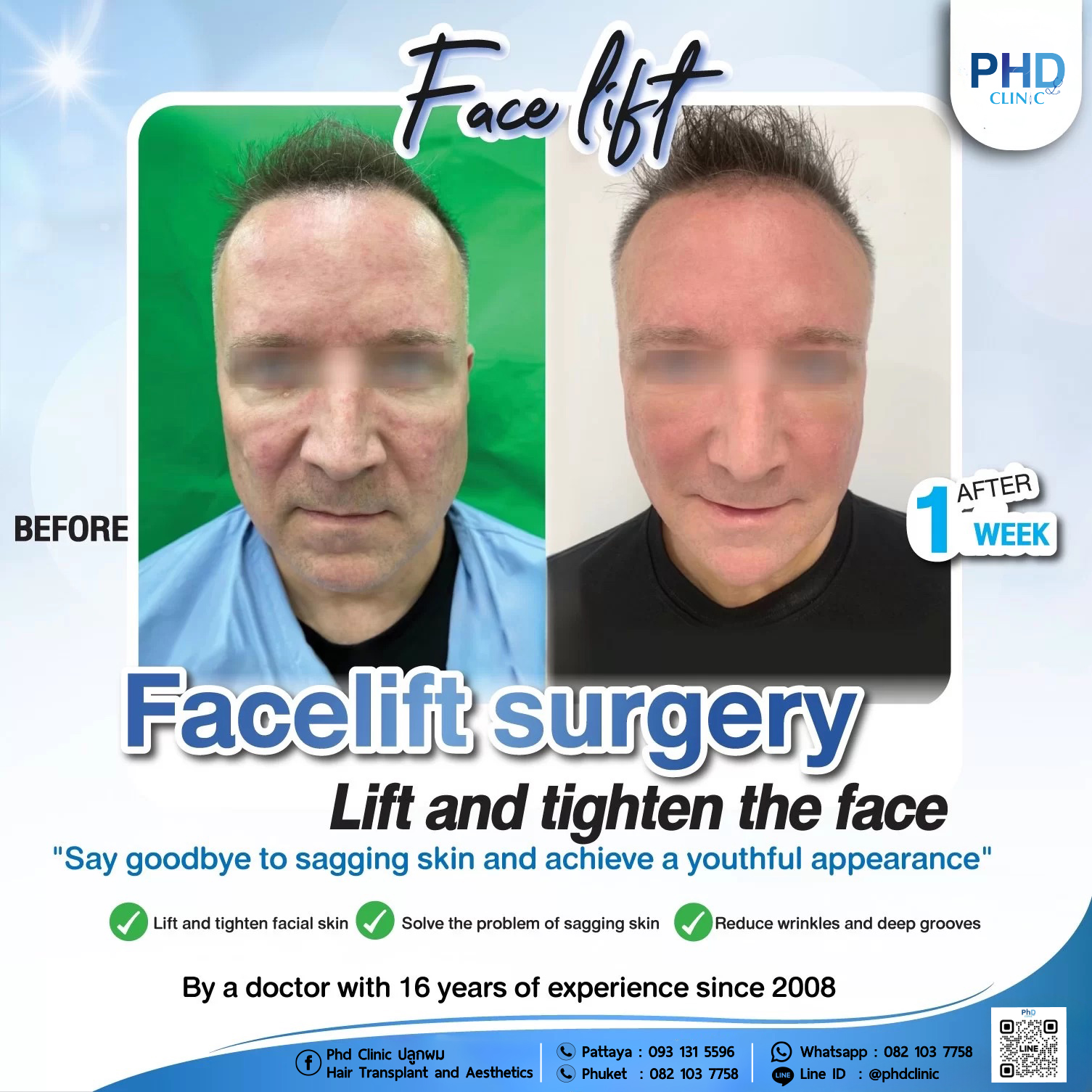
Facelift surgery
Facelift surgery Surgery to lift muscles and fat under the skin back to their proper positions. It is surgery to correct sagging facial features such as sagging cheeks and sagging with age, etc. Facelift surgery to lift and tighten the skin.
The tissue and muscles beneath must also be sewn tighter. Then sew the wound closed For the second case A face and neck lift will help pull sagging areas back into their ideal position while removing excess skin. The wound is then sutured. The remaining small marks and abnormal pigment spots must be corrected with other methods such as chemical peels and laser treatments.
What is a facelift?
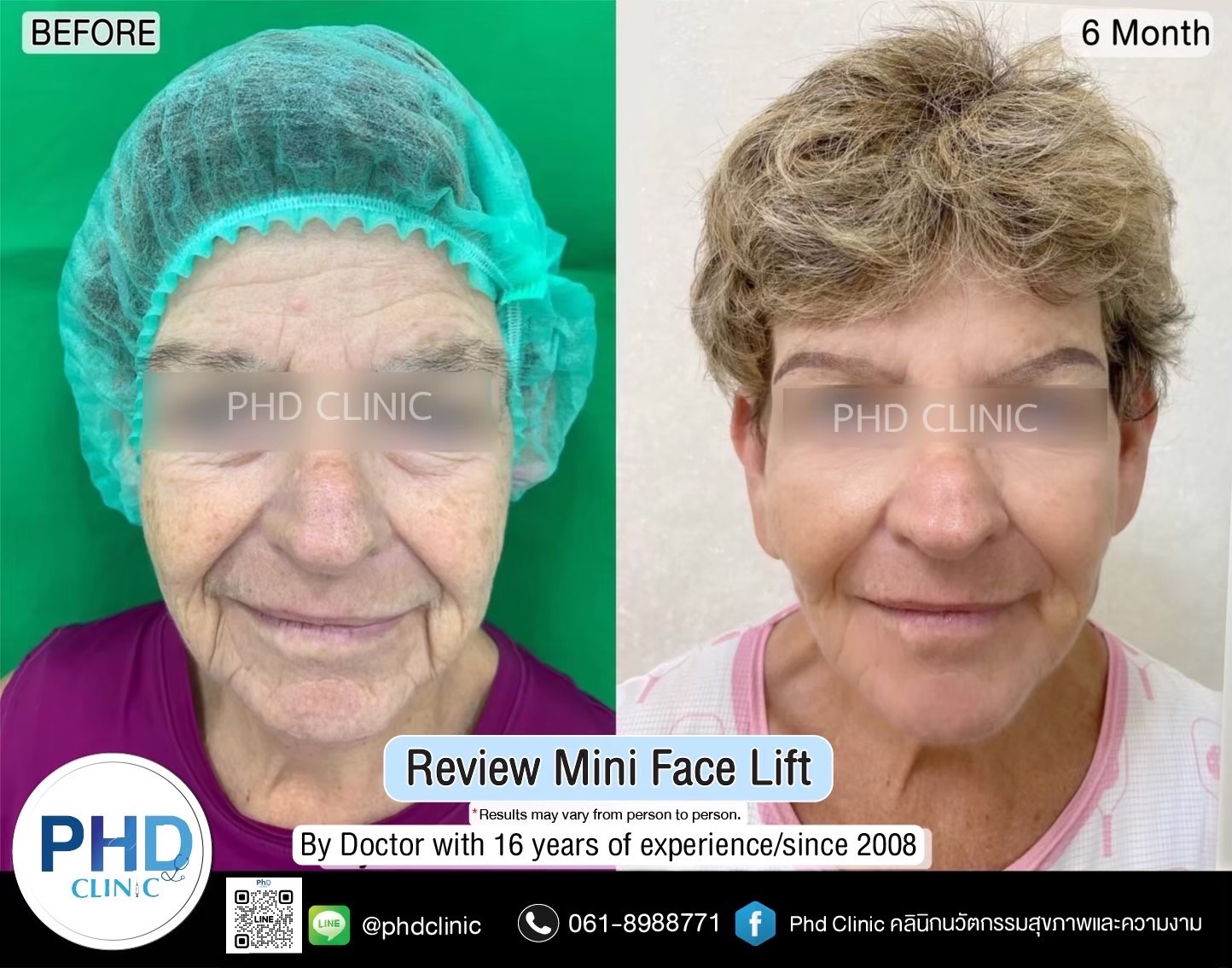
Mini Facetite is a facial lifting procedure to reduce wrinkles and signs of aging. It’s a minimally invasive facelift surgery that reverses the signs of aging.
A mini facelift is a surgical procedure that helps reduce facial sagging and wrinkles, restoring a youthful appearance. It tightens the face, giving it a younger look by lifting and firming it. This is a minimally invasive facial lifting surgery.
Why is a facelift surgery necessary?
As we age, the skin and various parts of the face undergo changes and deteriorate. These changes can be categorized into four main areas:
• Wrinkles become more pronounced on the forehead and eyebrows, and both eyebrows droop lower than normal, causing the upper eyelids to sag and cover the eyelashes. In addition to age-related wrinkles, habitually making stressed facial expressions and squeezing or pressing the face can also cause wrinkles.
• Around the eyes and cheeks, there is sagging eyelids, both upper and lower. The lower eyelids are puffy due to fat, and there are crow’s feet wrinkles on the sides of the eyes. Crow’s feet are a particular concern for women.
In the chin and lower cheek area, especially on the sides, there is skin sagging beyond the edge of the lower jawbone. Excess skin is more pronounced around the corners of the mouth, and there is sagging skin and fat under the chin.
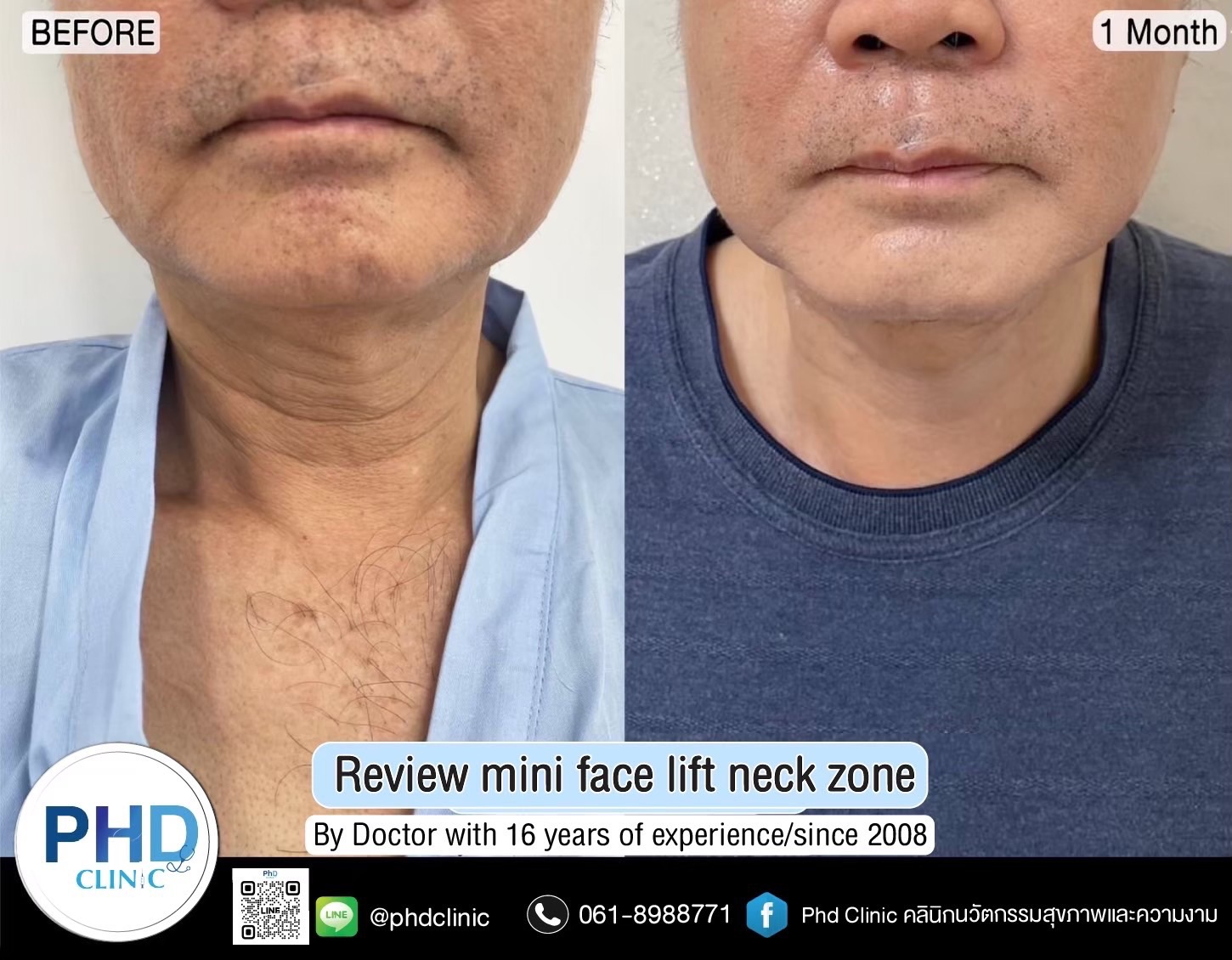
The skin on the neck may wrinkle, develop ridges, or create a double chin.
• A facelift aims to correct sagging skin and neck, including underlying soft tissues, by lifting and tightening internal tissues and possibly removing excess sagging skin. This results in a firmer, smoother, and more youthful appearance.
Who is suitable for a facelift surgery?
• For those who have problems with or wish to reshape their face to look younger, reduce wrinkles and sagging.
• There are no age restrictions; consideration is given to skin condition, facial sagging, and the patient’s preferences.
• Your weight is within the normal range. If you wish to lose weight, you should reach your desired weight before surgery.
• There are no underlying medical conditions that would contraindicate surgery, such as blood clotting disorders (hemophilia) or wound healing disorders (Ehlers-Danlos Syndrome), etc.
• I am not pregnant or breastfeeding.
Possible side effects of a facelift.
Possible side effects include
dizziness, nausea, and vomiting, usually resulting from the use of sedatives or anesthesia. In the first day or two, there may be areas of blood pooling under the skin, which usually improve on its own; in some cases, this may need to be suctioned out. Some facial muscles may not function normally, such as unevenness when smiling or raising eyebrows; this usually improves as the nerves and muscles heal, approximately 1-2 months after surgery. Additionally, there may be a permanent or raised scar behind the ear, which can be treated with topical medications or local injections. Hair loss may occur in the surgical area, but it usually regrows within 2-3 months after surgery.
Pre-surgical preparation
1. Consult with a doctor to discuss, understand, and plan the surgery.
2. Undergo a health check to assess the patient’s physical readiness.
3. Stop taking vitamin before surgery to prevent difficulty in clotting blood. Quit smoking two weeks before surgery and one to two weeks after, as smoking impairs blood flow to the skin, slowing wound healing.
PHD clinic has a team of doctors with over 16 years of experience in plastic surgery, including facelifts, chin lifts, double chin reduction, and eyebrow lifts, guaranteeing safety. They are also supported by a professional team.
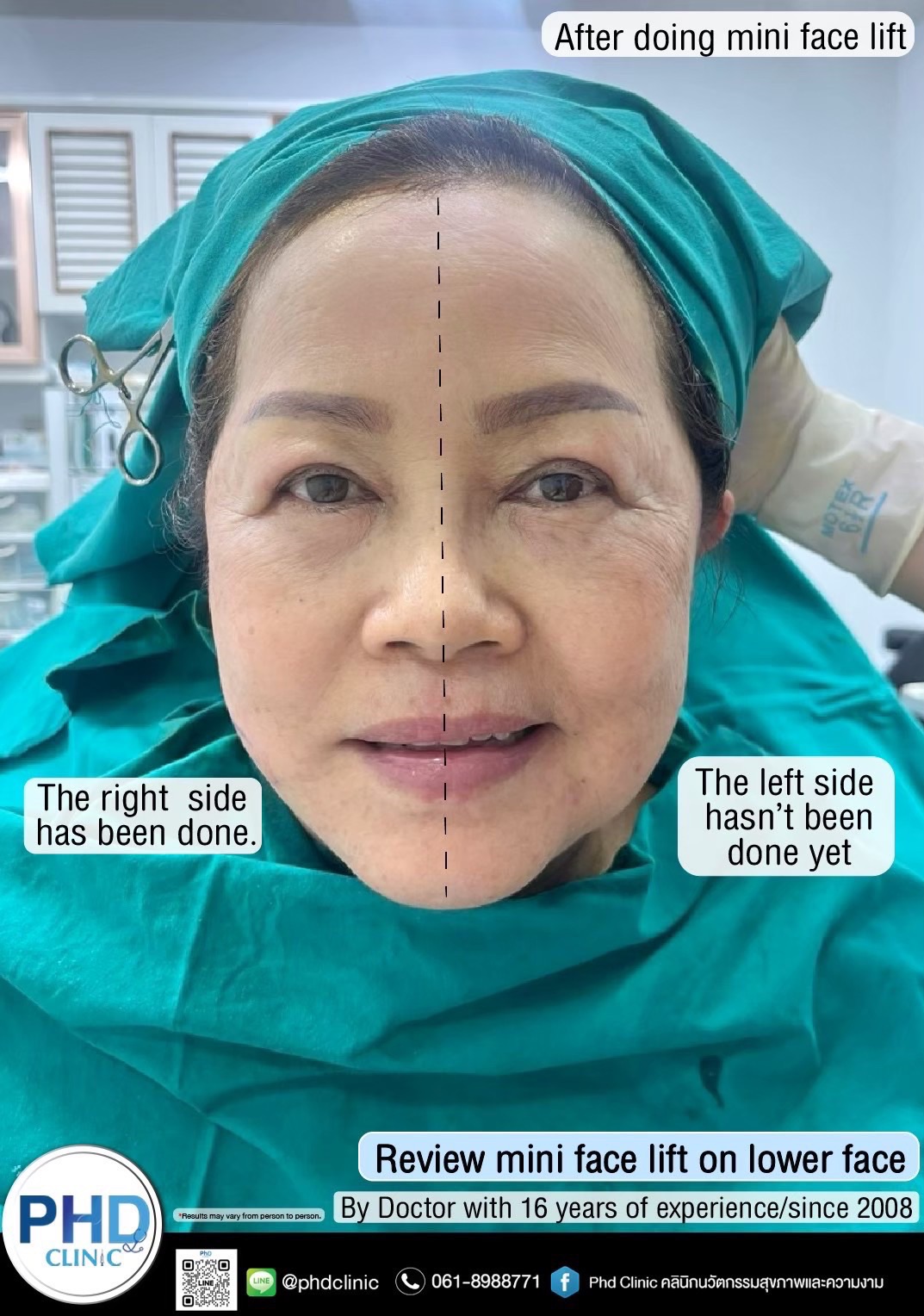
Self-care after facelift surgery
Post-surgical recovery depends on several factors, such as pre-operative health, the type of surgery performed, and post-operative care.
Typical symptoms include tightness at the surgical site, dry skin, and tenderness. There is mild pain at the site, but patients should be able to walk within the first day after surgery.
You can wash your hair on the second day after surgery, but you should wear a facial band at all times.
Your head should be elevated during the first 7 days (using 2-3 pillows).
You should take two weeks off work to recover and then you can return to your normal job.
You should refrain from exercising for 4 weeks.
Swelling and bruising may last 1-3 weeks. The face will look most swollen during the first 3-5 days and will subside rapidly within 2 weeks. It takes 1-2 months for the facial shape to settle.
The sensation in the skin on the face may decrease and will improve within 3-6 months.
Surgical scars are usually red and slightly raised during the first 1-3 months and fade within 6-12 months. Therefore, direct sunlight should be avoided for 3-6 months.
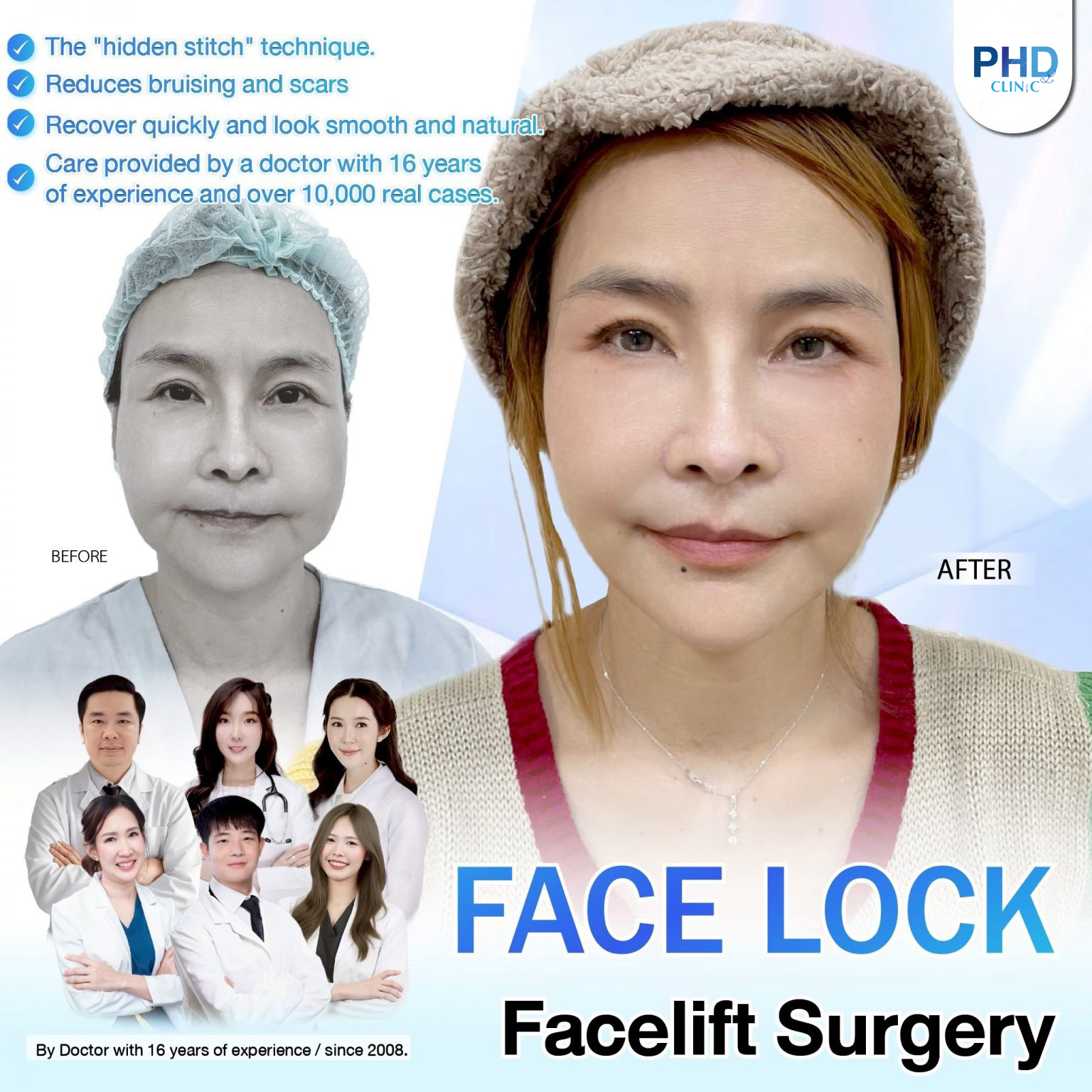
Tips for Eating and Post-Surgery Recovery
• Focus on Protein and Zinc: After surgery, the body needs a lot of protein to repair tissue and build new collagen, as well as zinc, which helps wounds heal faster.
• Avoid Spicy and High-Sodium Foods: Salty foods, spicy salads, or processed foods high in sodium will cause the body to retain water, resulting in noticeably longer-lasting facial swelling.
• Be Mindful of Chewing: In the first 1-2 weeks, eat soft foods that don’t require much chewing, such as porridge, rice soup, or broth, to reduce movement of the facial and jaw muscles, which may pull on the wound near the ear. MEDA