
ผ่าตัดดึงหน้าภูเก็ต

Where is the best place to Otoplasty in Pattaya

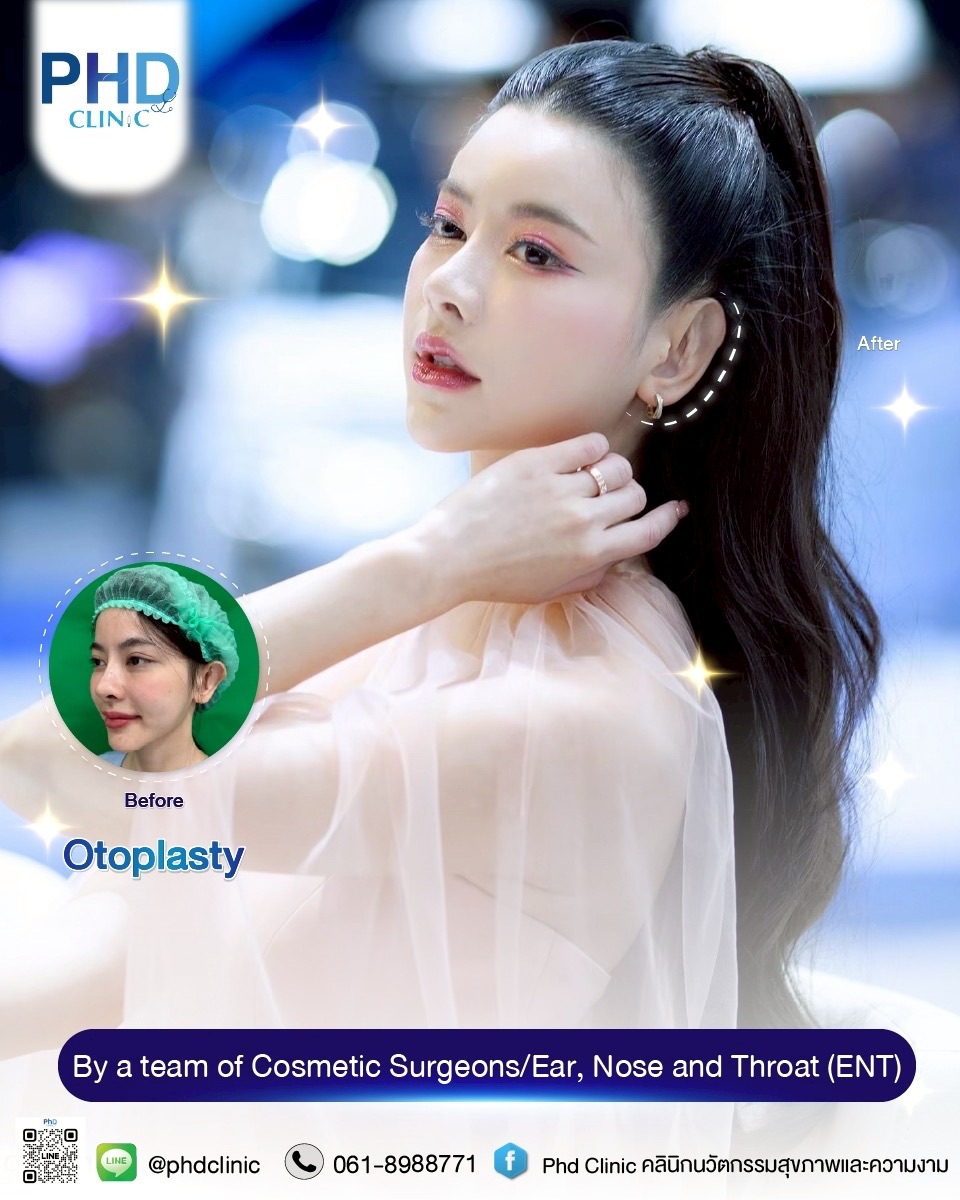
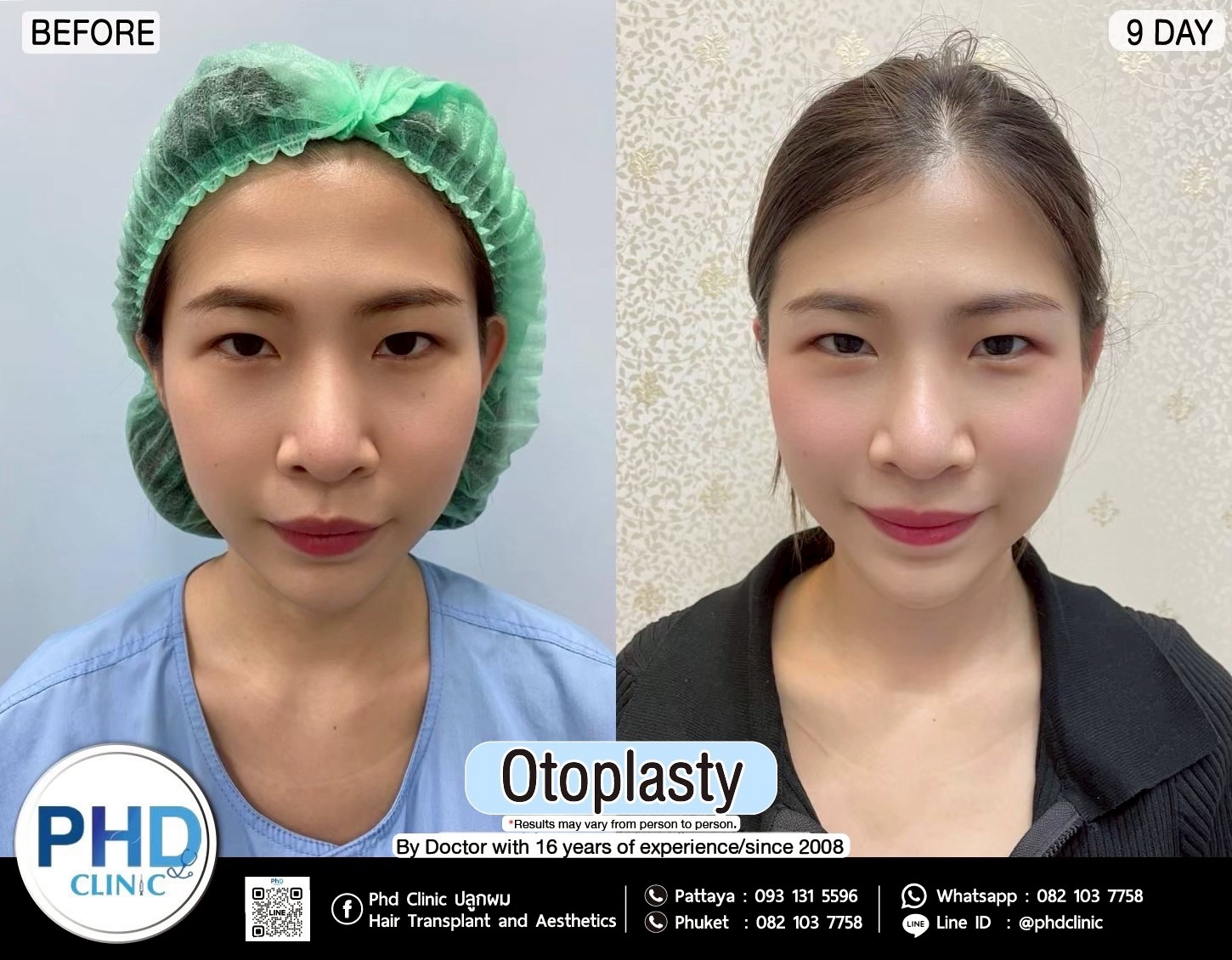
Where is the best place to Otoplasty in Pattaya : Otoplasty (or Ear Pinning) is a cosmetic surgery procedure to correct abnormally protruding ears, giving them a more natural angle and shape that complements the face. This is most often caused by misshapen ear cartilage or an excessively deep ear hollow.

What are protruding ears?

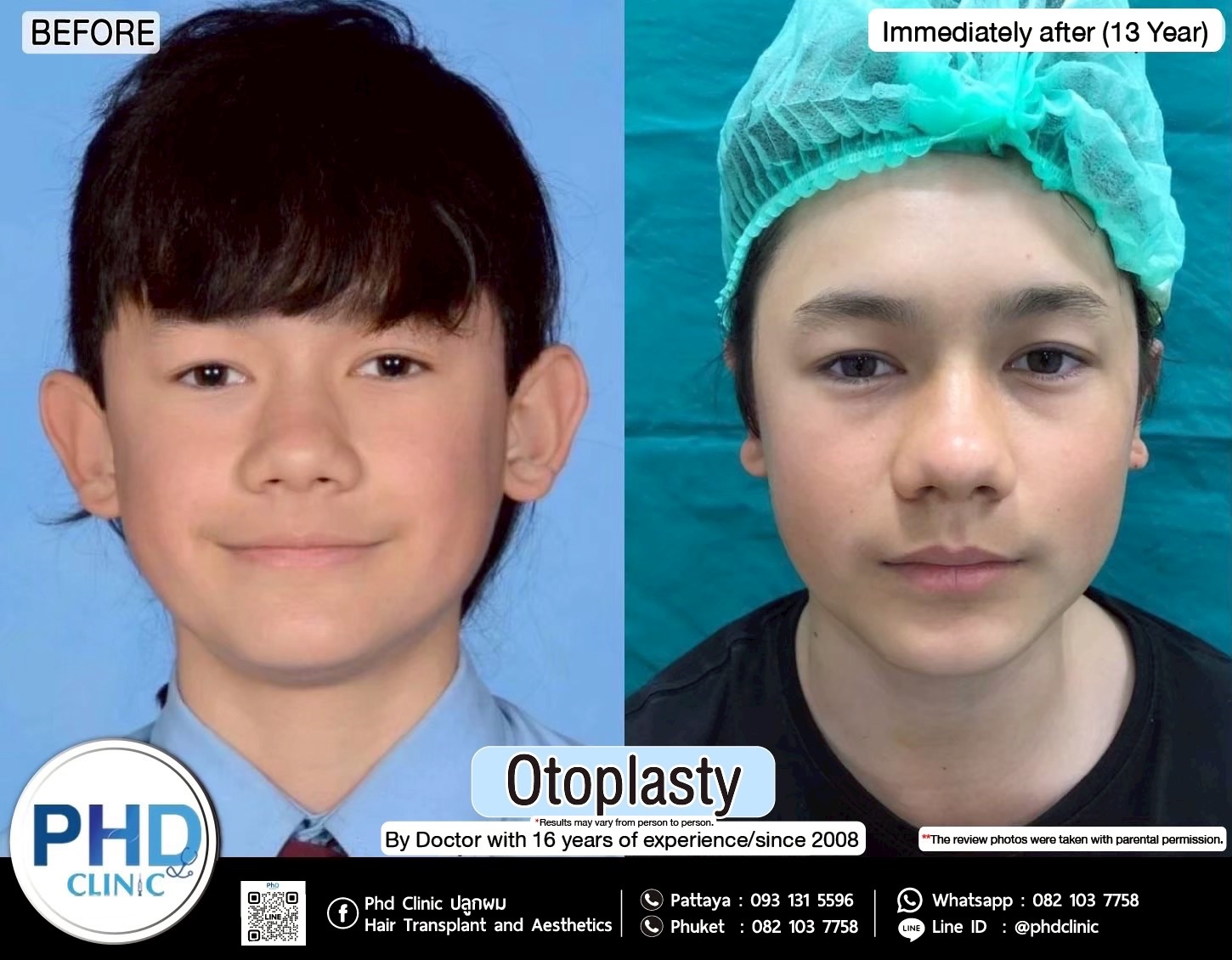
Prominent ears (or bat ears) refer to ears that protrude or stick out more than normal to the sides of the head. This is usually congenital, due to genetic factors, and typically occurs in both ears (though the degree of protrusion may vary).
In medical terms, the characteristics of ears that are considered to be “protruding ears” are determined by the following:
 Ear angle: Normally, a person’s ears are angled about 15–25 degrees away from the skull. However, if the angle is wider than 30 degrees, the ears become noticeably protruding.
 Distance: Measured from the outermost edge of the ear (helix) to the skin at the back of the head, a distance greater than 2 centimeters (20 millimeters) is considered protruding ears.
Where is the best Otoplasty in Phuket

What is otoplasty (or correction of protruding ears)

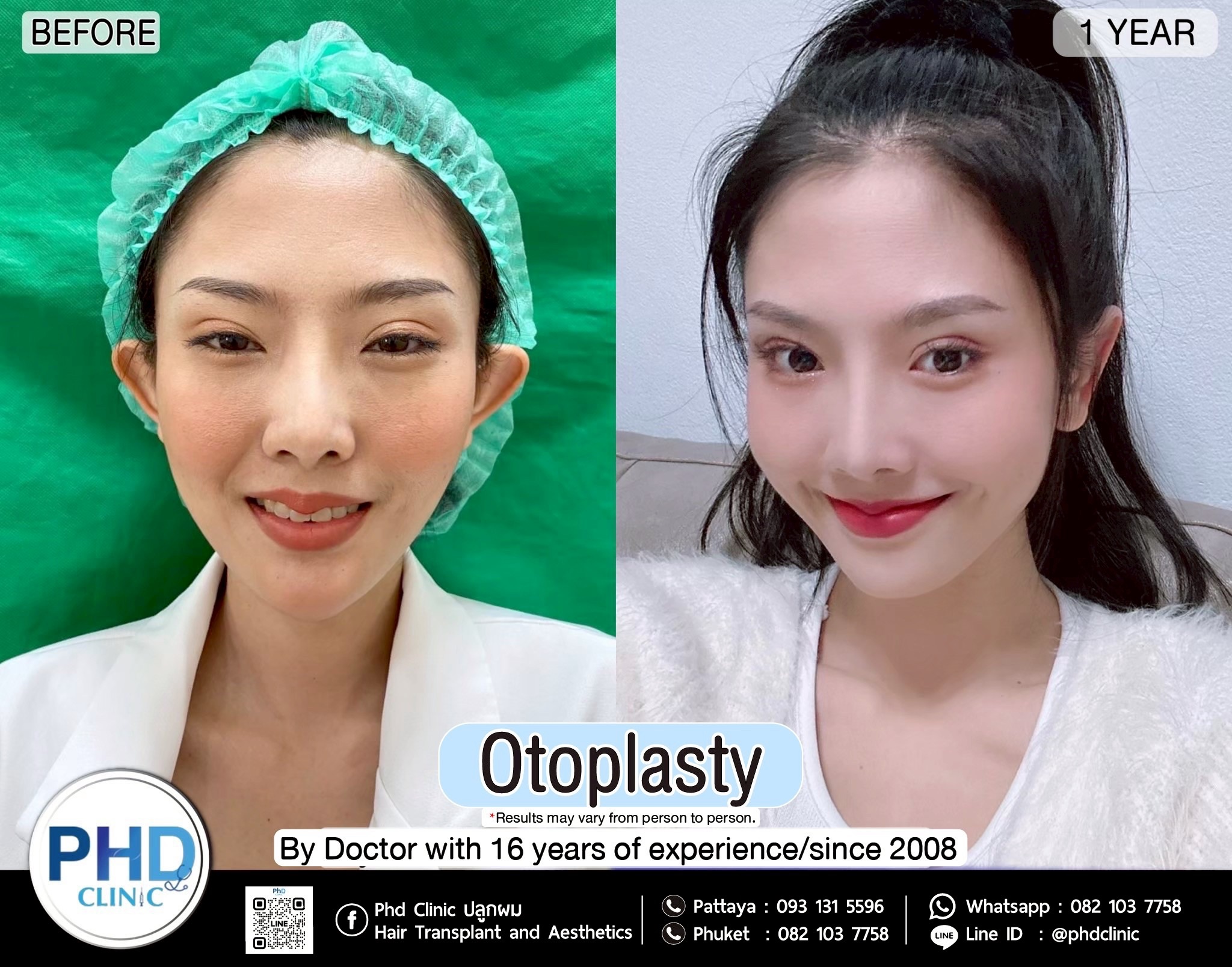
Otoplasty is a cosmetic surgery procedure to correct ears that protrude excessively to the sides, bringing them closer to the head, creating a more balanced and natural appearance in proportion to the face. This surgery directly modifies the ear cartilage structure and does not affect the internal auditory nervous system.

The working principles of surgery.

the surgeon will consider addressing the problem based on two main physiological causes.

1. Creating a New Antihelix: For individuals with flat cartilage lacking a natural Y-shaped fold, the doctor will make an incision behind the ear and use sutures to pull and secure the cartilage, creating a new antihelix. This allows the upper part of the ear to fold backward.
2. Concha Reduction: For people whose cartilage in the concha is too large and deep, pushing the ear outwards, the doctor will trim away some of the excess cartilage and suture the ear closer to the skin of the skull with pins. MEDA

แก้หูกาง

Surgical techniques

The surgeon will consider the technique based on each individual’s ear structure, and the main steps are as follows:

Incision: The doctor will make an incision behind the ear, making the scar invisible from the front.
Cartilage reshaping:
Suturing technique: Sutures are used to pull the cartilage into a new antihelical fold, causing it to curl back.
Cartilage resection technique: If the ear socket is too deep, the doctor will trim some of the excess cartilage to allow the ear to fit closer to the head.
Wound closure: The wound behind the ear will be closed with dissolvable sutures or regular sutures (which will require a follow-up appointment for suture removal).
Otoplasty pattaya

Pre-operative preparation steps

1. Avoid medications and supplements: Stop taking anti-inflammatory drugs (NSAIDs) and supplements that affect blood clotting (such as vitamin E, fish oil, ginkgo biloba extract) for at least 1–2 weeks.
2. Avoid smoking and alcohol: For at least 1–2 weeks before surgery to promote faster wound healing and reduce the risk of tissue necrosis.
3. Prepare your body: Wash your hair thoroughly the day before the surgery, as you will need to avoid getting the wound wet for several days afterward.

Procedures on the day of surgery and anesthesia.
1. Anesthesia: In most adults, only local anesthesia is used, possibly with the administration of an anxiety-reducing medication (general anesthesia may be considered for young children).
2. Surgery duration: Approximately 1-2 hours, depending on the complexity and whether both sides are being treated.
3. Recovery: This is a minor surgery (outpatient procedure). After the surgery, you can return home to recover immediately; there is no need to stay in the hospital.

Post-operative care

Self-care during the first week is crucial to the results.
 
 Bandaging: After surgery, your doctor will wrap a headband around your head to support the shape of your ear and reduce swelling. Do not remove it yourself until your doctor gives you permission (it is usually left on for about 3-5 days).
 Wearing ear bands: After removing the bandage, wear elastic ear bands (similar to sports hair ties) 24 hours a day for the first 1-2 weeks, and then only while sleeping for about a month to prevent the ears from bending or being impacted while sleeping.
 Sleeping position: For the first 2-4 weeks, you must sleep on your back only. Never sleep on your side with your ears pressed against the pillow.
 Cleaning: Avoid getting the wound wet until the stitches are removed (if non-dissolvable sutures were used, stitch removal is usually scheduled for 7-10 days).
 Activities to avoid: Avoid strenuous exercise, contact sports, or wearing clothing with a crew neck that stretches forcefully over the head for at least 4–6 weeks.

Possible side effects are minor.

Although it is a highly safe surgery, there are risks you should be aware of:
 
• Swelling and bruising: This is normal and will gradually improve within 1–2 weeks.
• Numbness: You may experience numbness around your ears, which will gradually return to normal within a few months.
• Asymmetry: The two ears may not be perfectly symmetrical because the original structure of the bones and base of the skull are not always symmetrical.
• Ear relapse: There is a small chance that the sutures holding the ear in place may come loose or break, causing the ear to slightly protrude again.
Otoplasty pattaya

Tips for daily life during recovery.

• Clothing: We recommend wearing button-front shirts or shirts with zippers at all times during recovery. Avoid all types of crew neck or narrow-neck t-shirts to prevent them from snagging or chafing your ears when putting on and taking off your clothes.
• Hair Washing: While the stitches are still being removed and the wound is still healing, avoid getting your hair wet. If your scalp feels sticky, we recommend getting your hair washed at a hair salon. Ask the stylist to cover your ears with plastic and wash your hair carefully while you lie down, or use dry shampoo.
• Wearing Eyeglasses/Sunglasses: For the first 2-3 weeks, the frames of glasses will press on the area behind your ears where the wound is located. If you absolutely must wear glasses, you may need to use adhesive tape to cushion the frames against the skin or slightly raise the frames above your ears to reduce pressure.

REVIEW